


Minimalist interiors are defined by restraint. Neutral palettes, clean lines, and open space create environments that feel calm and intentional. Yet without the right material balance, minimalism can feel stark or incomplete. This is where texture becomes essential.
Preserved moss and artificial plant panels introduce depth without disrupting a minimalist aesthetic. A moss wall does not compete with simplicity — it enhances it. At Naturalist, we use maintenance-free greenery to soften structured interiors while preserving clarity and refinement.
-

-
Why Minimalism Requires Material Contrast
Minimalist design often relies on smooth finishes — painted drywall, polished concrete, glass, or metal. While visually clean, these surfaces reflect light and can amplify hardness in a space.
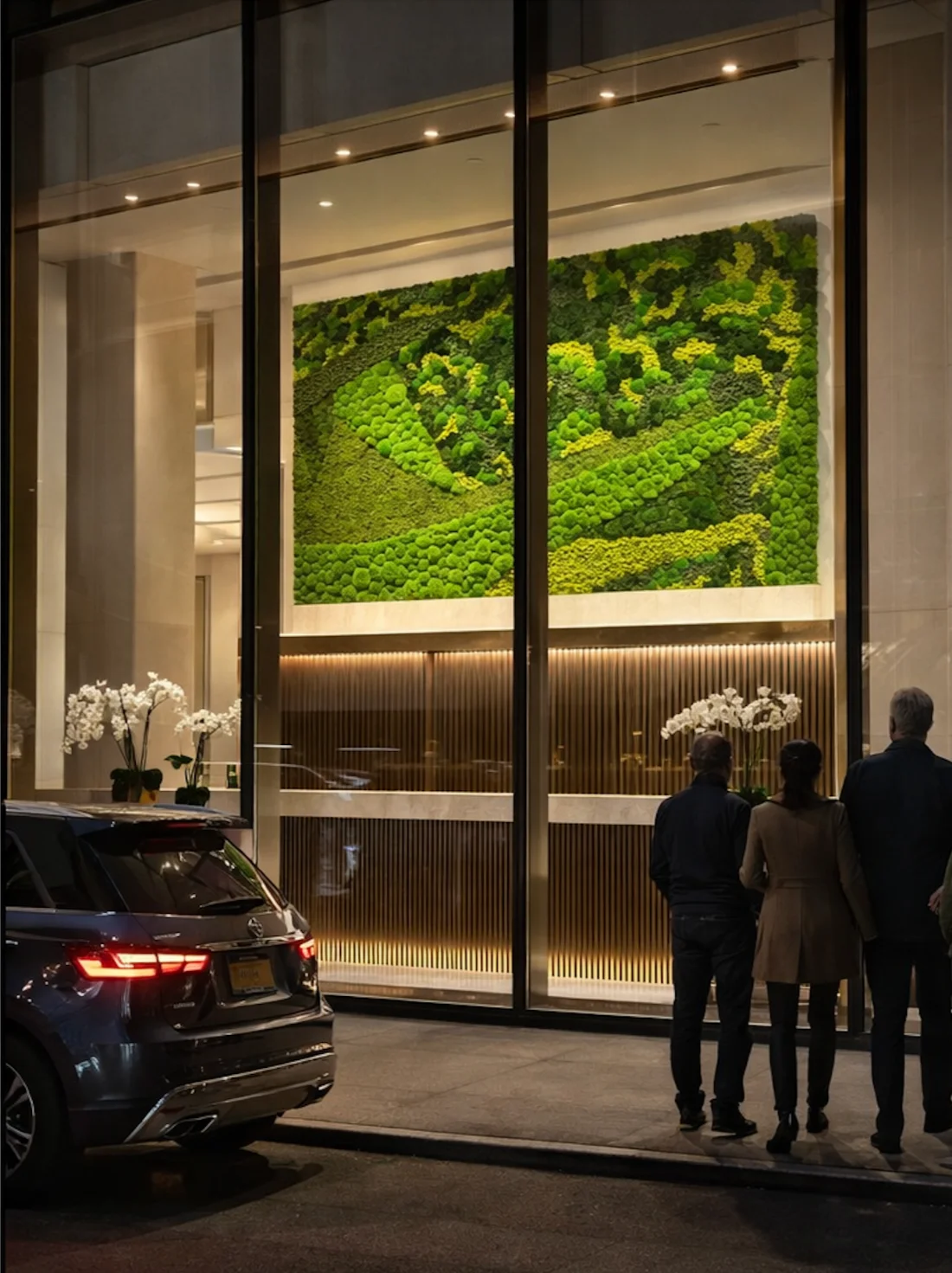
A preserved moss wall introduces contrast through softness rather than color. This tactile surface reduces glare, creating subtle shadow. Instead of adding decorative elements, a moss wall art installation integrates directly into the architecture.
Green walls in minimalist interiors function as grounding elements. They bring organic variation to controlled environments without overwhelming the overall design language.

-
Moss Walls as Architectural Features
In biophilic interior design, materials are selected to evoke nature while maintaining cohesion. A moss plant wall achieves this balance. Unlike live plant systems, preserved moss does not require irrigation or sunlight, making it suitable for highly controlled interiors.
A greenery wall made from preserved moss becomes part of the structure rather than a decorative layer. The wall green emerges from texture and dimension, not from bold pigment.
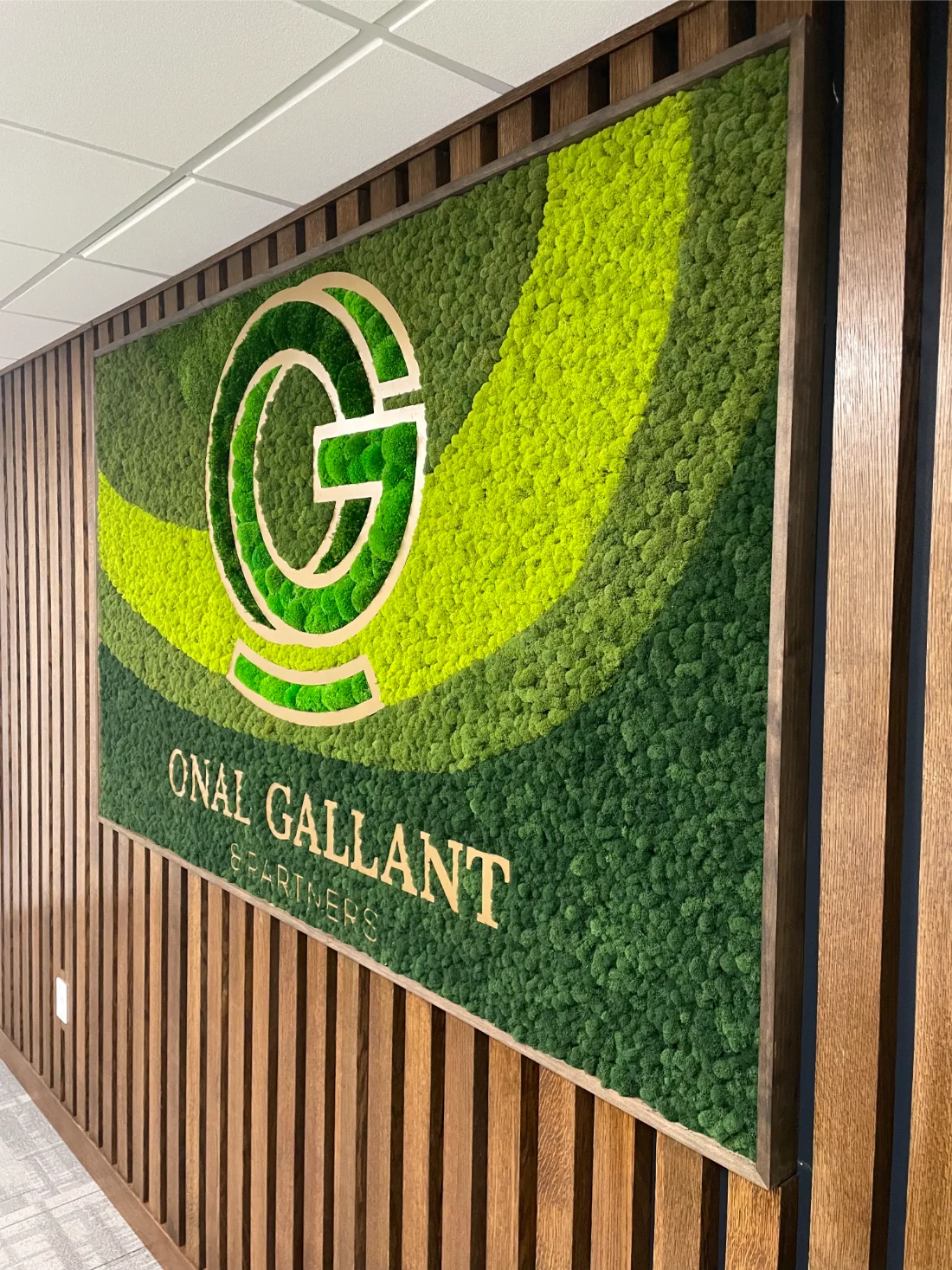
Moss wall art works especially well in minimalist spaces because it introduces depth without clutter. A framed moss artwork can anchor a room, adding warmth while preserving negative space.
-


-

-
Artificial Plant Panels in Contemporary Spaces
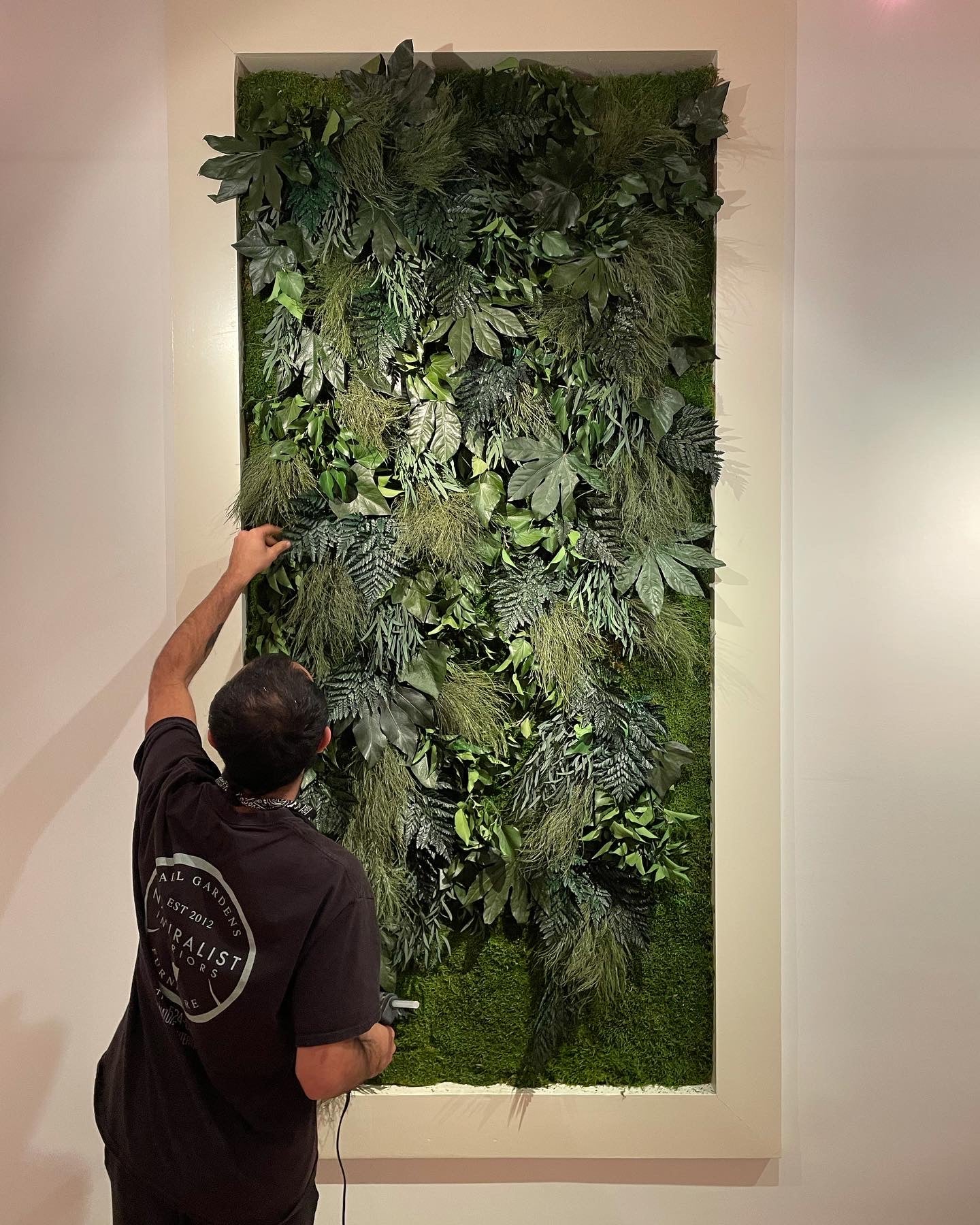
Artificial plant panels provide another option for minimalist interiors seeking subtle dimension. Unlike overly dense greenery walls, carefully curated artificial foliage panels can create controlled movement within a restrained palette.
These panels add architectural softness to reception areas, corridors, and living spaces. In commercial environments, artificial greenwalls offer consistency without maintenance demands. Their layered structure adds visual rhythm while maintaining a modern aesthetic.
In both residential and commercial settings, artificial plant panels act as green wall decor that supports simplicity rather than distracting from it.

-
The Role of Biophilia in Minimalist Design
Biophilia — the innate human connection to nature — plays a powerful role in minimalist interiors. Clean spaces benefit from organic materials that reduce visual tension. Preserved moss supports this connection by introducing natural texture without excess.
Biophilic interior design does not require dramatic installations. Even a contained moss wall art feature can change how a space feels. It softens edges, balances scale, and creates an atmosphere of calm.
By incorporating preserved moss or artificial plant panels into minimalist interiors, designers achieve harmony between structure and nature.
-


-

-
Naturalist’s Approach to Refined Green Walls
At Naturalist, we design green walls and moss artwork with restraint in mind. Our installations are intended to feel integrated, not applied. Whether creating a full preserved moss wall or a focused moss artwork feature, we prioritize proportion, texture, and longevity.
Minimalist interiors thrive when texture replaces ornamentation. A moss wall introduces complexity without clutter. An artificial greenery wall provides softness without sacrificing clarity.
When simplicity meets natural texture, the result is timeless.

Get In Touch
-
Customer service
info@naturalist.us -
Follow us


