

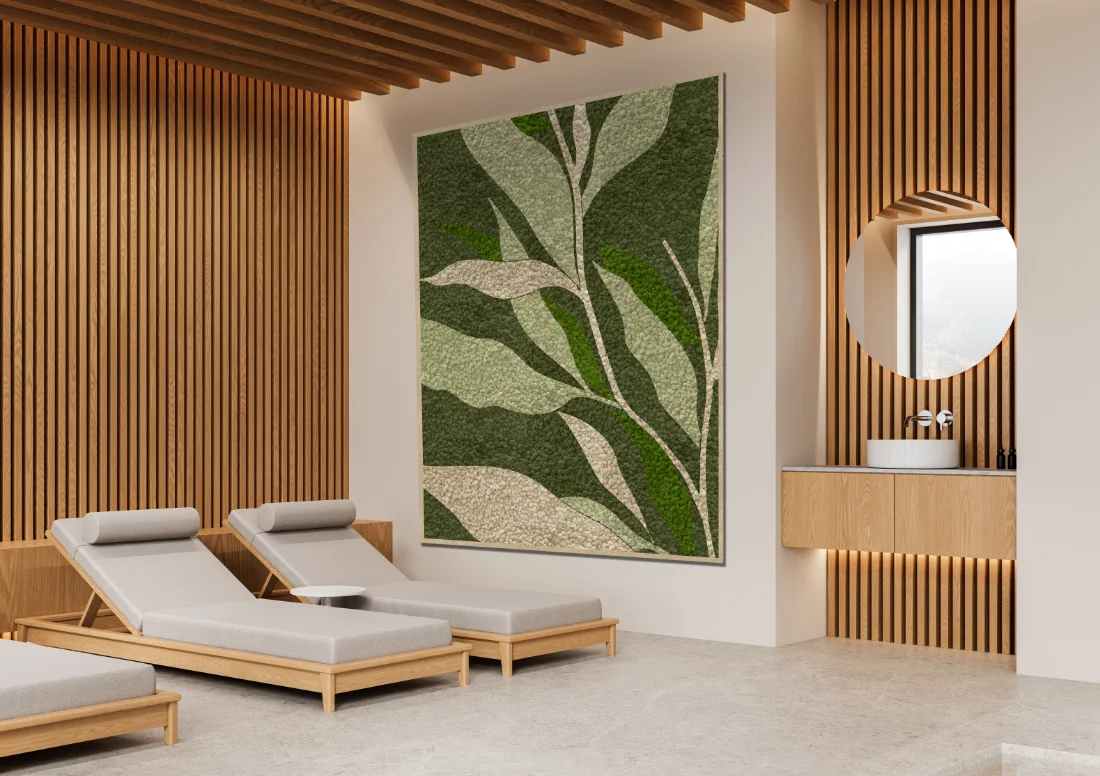
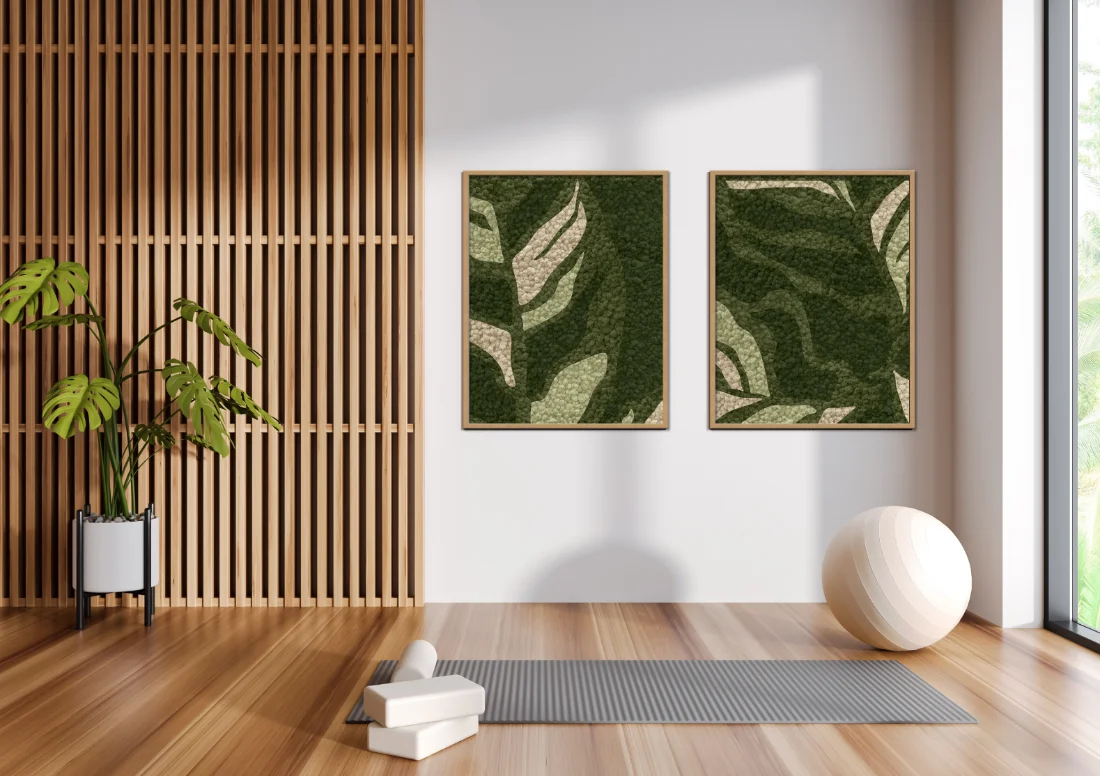
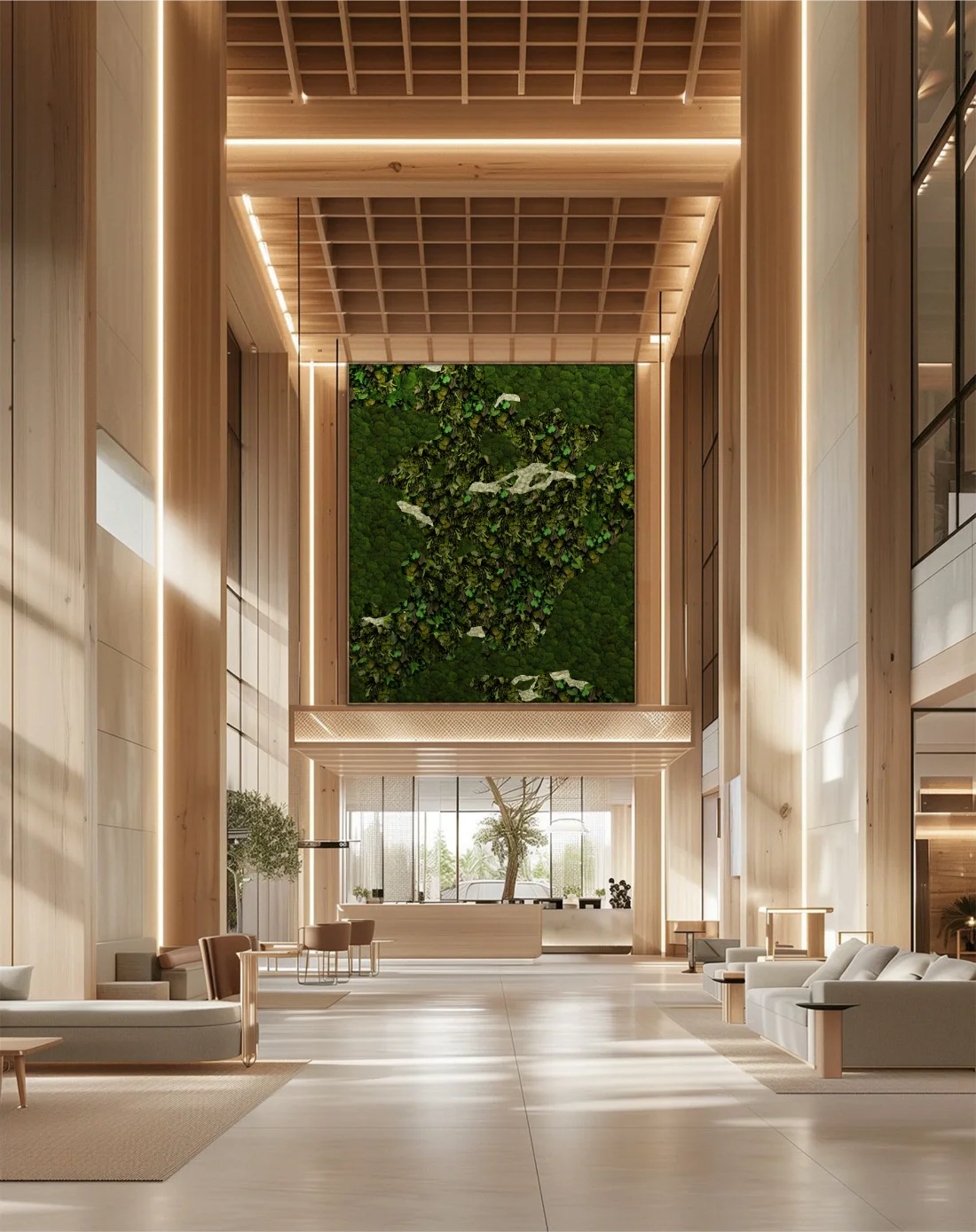
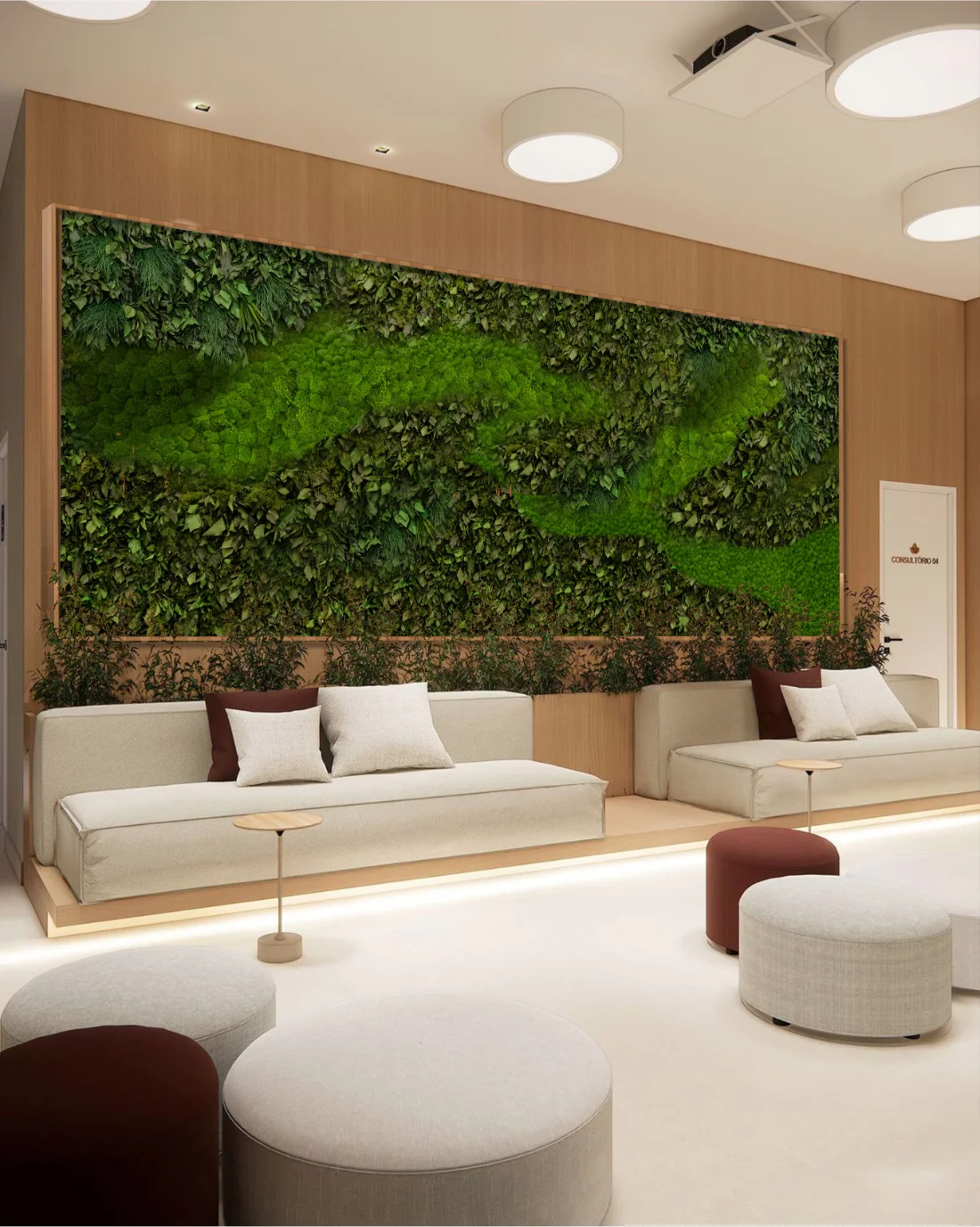
Modern interiors are often filled with movement: sharp lines, high contrast, reflective surfaces, and layered materials competing for attention. As a result, designers are increasingly seeking ways to introduce balance and stillness. Preserved moss has emerged as one of the most effective materials for achieving that calm.
Unlike traditional green walls or painted accent walls, a preserved moss wall does not demand attention. Instead, it softens a space through texture, depth, and natural tone. At Naturalist, we view moss wall design not simply as decoration, but as a biophilic design strategy rooted in sensory experience.
-

-
Understanding Biophilia in Interior Design
Biophilia refers to the innate human connection to nature. In biophilic interior design, natural materials and organic forms are intentionally integrated into built environments to improve comfort, focus, and emotional well-being.
A moss wall supports biophilic design by introducing a real, organic surface into a controlled architectural setting. Unlike artificial finishes, preserved moss retains the authentic softness and irregularity of nature. It becomes a tactile reminder of the outdoors, even in corporate offices, hospitality spaces, or minimalist residences.
Where live green walls require irrigation, sunlight, and ongoing care, preserved moss offers a stable alternative. It maintains its color and texture without growing or changing shape, making it ideal for interior environments that demand longevity and consistency.

-
Why Preserved Moss Reduces Visual Noise
In open-plan offices or high-traffic commercial interiors, a greenery wall made from preserved moss can anchor the room. The dense surface texture creates depth without introducing chaos. Instead of visual stimulation, it provides visual relief.
A moss wall art installation functions similarly. Framed moss artwork introduces softness to otherwise rigid architectural compositions. The result is subtle but transformative, a wall green not through pigment, but through natural texture.
-


-

-
Texture as a Tool for Emotional Balance
Color is often used to create mood in interiors, but texture plays an equally important role. Preserved moss introduces dimensional variation across its surface. Even in a monochromatic palette, that variation creates movement and warmth.
In minimalist spaces, a moss plant wall offers contrast without clutter. In hospitality environments, moss artwork brings quiet elegance to reception areas and lounges. In residential settings, green wall decor made from preserved moss provides a grounding focal point that does not overwhelm the room.
Unlike trend-driven accent walls, a moss wall ages gracefully. It does not fade, peel, or require repainting. When installed correctly and kept away from excessive moisture or direct heat, preserved moss maintains its character for years.

-
Moss Wall Art as Architectural Element
Moss wall art is no longer limited to decorative panels. Designers are increasingly treating preserved moss as an architectural surface. Large-scale installations, recessed moss in wall features, and custom moss artwork all contribute to spatial identity.
At Naturalist, we consider scale, proportion, and placement carefully. A moss wall should feel integrated into the architecture rather than applied onto it. Whether installed as a full greenery wall or as a contained art piece, preserved moss works best when it complements the surrounding material palette.
The subtle irregularities of green moss create shadow and contour that change throughout the day. This dynamic quality reinforces the sense of stillness rather than disrupting it.
-


-

-
The Naturalist Approach to Biophilic Calm
At Naturalist, our work centers on maintenance-free greenery that supports both aesthetics and well-being. Preserved moss allows us to design moss walls and moss wall art that feel authentic yet controlled. It bridges the gap between nature and architecture.
Biophilic interior design does not always require dramatic greenwalls or expansive plant installations. Sometimes, stillness is achieved through restraint, through a carefully designed moss wall that introduces softness, balance, and connection without excess.
Preserved moss offers exactly that: nature, paused at its peak, integrated into interiors with intention.

Get In Touch
-
Customer service
info@naturalist.us -
Follow us


